Dry eyes after refractive surgery (LASIK, PKR, SMILE) are common. While usually temporary, it can become
persistent if not anticipated and managed correctly. Today, the focus is no longer limited to vision correction; the quality of the ocular surface directly impacts patient comfort, recovery, and
satisfaction.
Why can refractive surgery worsen dry eyes?
Refractive surgery can lead to:
- a temporary decrease in corneal
sensitivity, - a disruption in tear production,
- an unstable tear film,
- the uncovering of pre-existing
dry eye, which may sometimes be asymptomatic.
In many cases, surgery does not 'create' dryness; instead, it
unbalances an already fragile eye surface.
Different types of dry eye after surgery
These include:
- the transient post-operative dryness (the most
common), - the evaporative dryness related to Meibomian gland
dysfunction (MGD), - the persistent inflammatory dryness,
- intolerance to therapeutic contact lenses after
surgery, - chronic visual discomfort that can affect
quality of life.
Phenicia Vision's approach before and after refractive surgery
At Phenicia Vision, dry eye is an integral part of the patient care pathway. It is:
- systematically screened before
the procedure, - treated beforehand if necessary,
- monitored and adjusted after surgery.
Before refractive surgery
- Comprehensive dry eye assessment (clinical +
SIRIUS instrumental analysis), - screening for MGD and inflammation,
- implementation of a personalized preventive
treatment, - optimization of the ocular surface before the
surgical procedure.
After refractive surgery
- individualized monitoring of the eye surface,
- precise adjustment of treatments,
- use of targeted technologies (LipiFlow, LED) in
cases of persistent dryness, - reduction of the risk of chronic discomfort and lasting visual
disturbances.
Result: improved comfort, faster visual recovery, and better overall satisfaction.
Dry eye: a condition of the tear film
Dry eye isn't just about a lack of
tears. It's actually an imbalance of the tear film,
which is made up of three layers:
- lipid (from the Meibomian glands),
- aqueous (from the lacrimal glands),
- mucin (for adherence to the eye's surface).
When the lipid layer is deficient, evaporation speeds up
: this leads to evaporative dry eye, the most
frequent form today.
Meibomian Gland Dysfunction (MGD): The #1 Cause
MGD accounts for over 80% of dry eye cases.
Blocked glands or poor quality lipid secretion lead to:
- excessive tear evaporation,
- drying of the eye's surface,
- chronic inflammation.
Artificial tears alone do not address the root cause.
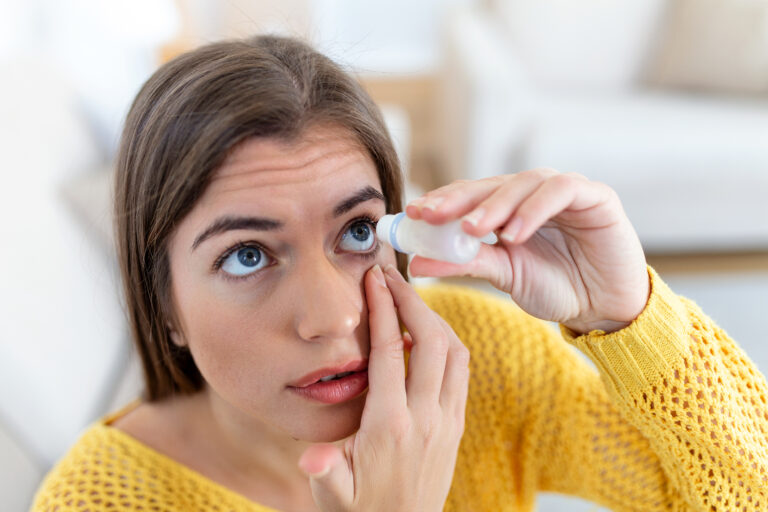
Common Symptoms Not to Be Ignored
- feeling of a foreign object or sand,
- burning, stinging, redness,
- fluctuating vision, eye strain from screens,
- increased sensitivity to light,
- discomfort when wearing contact lenses,
- heavy or sticky eyelids.
Without proper management, these signs can develop into chronic damage to the eye's surface.
Dry Eye and the Marseille Environment
In Marseille, the Mediterranean climate, wind, pollution, dry air conditioning, and sun exposure all contribute to dry eye. Phenicia Vision's protocols are tailored to local environmental factors, with
both a preventive and curative approach.
A Precise and Objective Dry Eye Assessment
Before any treatment, Phenicia Vision conducts a comprehensive assessment using SIRIUS imaging, which allows for:
- a detailed analysis of the eye's surface,
- an evaluation of tear film stability,
- identifying the type of dryness (evaporative, aqueous, or
mixed), - objective monitoring of progress after treatment (LipiFlow, LED,
medical care).
In Summary
Dry eye is a key concern in modern refractive surgery.
A comprehensive, proactive, and technological approach helps to ensure optimal visual outcomes and sustainably improve patient comfort.
At Phenicia Vision, the ocular surface is never treated as a minor detail: it is a medical priority.