Opération de la presbytie
voir de près sans lunettes
Après 45 ans, lire un menu devient un exercice de bras tendus. PresbyLASIK, Supracor ou PresbyPKR : le protocole se décide à partir de votre cornée, pas sur catalogue. Bilan et consultation offerts.
Qu’est-ce que la presbytie ?
La presbytie est un défaut naturel qui apparaît généralement autour de 45 ans et s’inscrit dans un processus évolutif qui s’intensifie avec le temps, avant de se stabiliser après 15 à 20 ans. Ce phénomène est directement lié à l’âge et au vieillissement naturel de l’œil et du système oculaire, est inévitable.
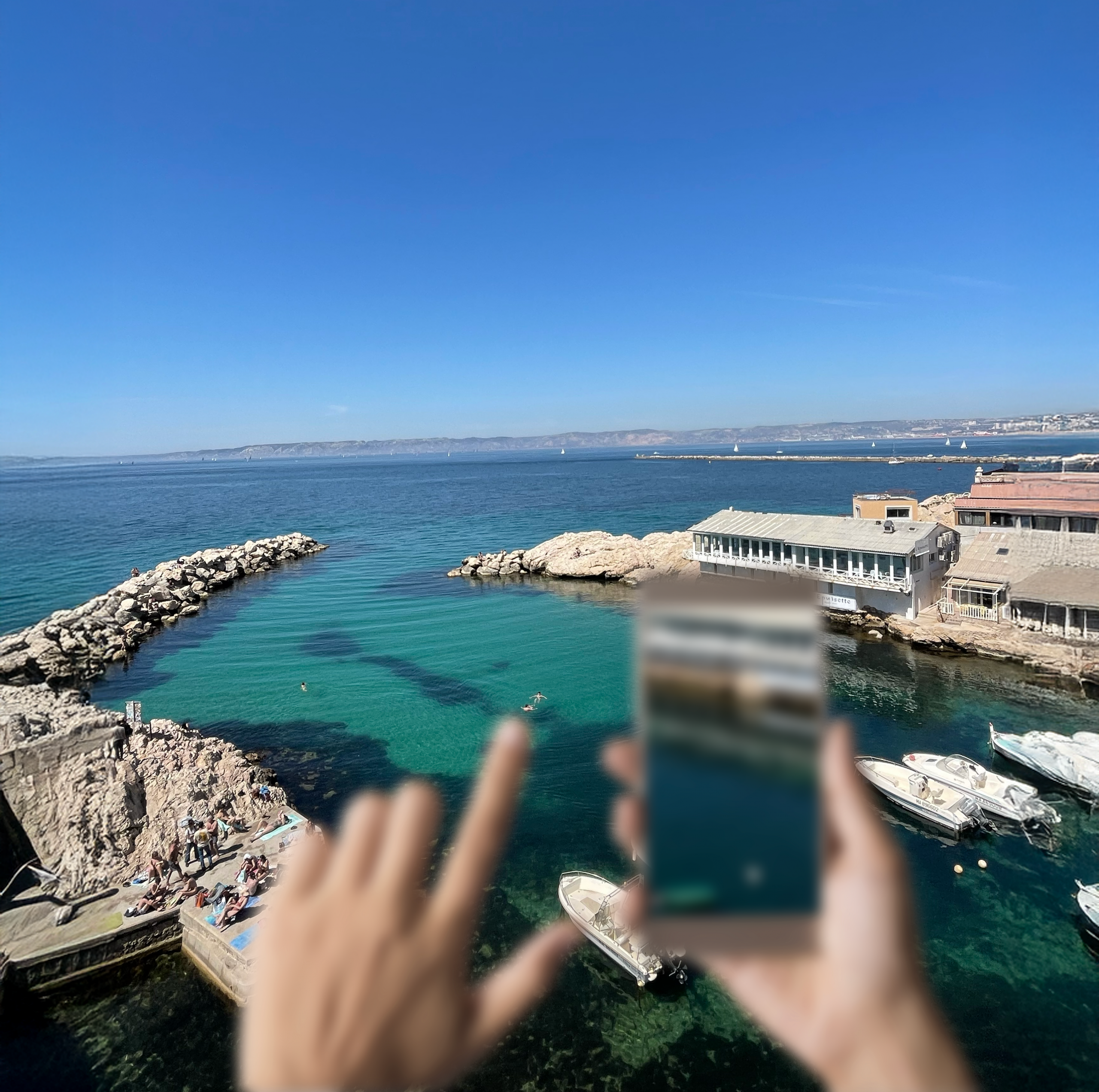
Vous peinez à lire de près ou ressentez le besoin d’éloigner vos livres ou votre téléphone pour mieux voir ? Cela peut révéler une difficulté du cristallin à accommoder suffisamment pour offrir une vision nette à courte distance. Ce trouble concerne de nombreux patients à partir de 40 45 ans
À quel âge apparaît la presbytie ?
Les premiers signes apparaissent généralement entre 42 et 48 ans, puis la correction nécessaire augmente tous les deux à trois ans avant de se stabiliser autour de 60 ans. C'est la raison pour laquelle vos lunettes de lecture changent fréquemment les premières années, et presque plus ensuite.
La presbytie, c'est quoi et à quel âge apparaît-elle ?
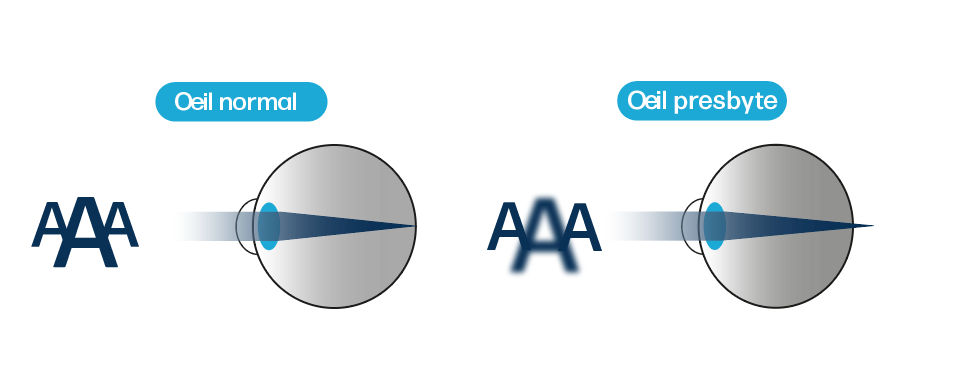
La presbytie apparaît en général vers 45 ans. Le cristallin, cette lentille souple logée à l'intérieur de l'œil, perd peu à peu la capacité de se déformer qui lui permettait de faire la mise au point de près. La vision de loin demeure nette, tandis que la vision rapprochée se brouille.
La presbytie est un trouble de la vision lié au vieillissement naturel de l'œil, et non une maladie. Elle concerne l'ensemble de la population à partir d'un certain âge, y compris les personnes qui n'ont jamais eu besoin d'une correction optique.
Contrairement à la myopie ou à l'astigmatisme, ce défaut visuel ne résulte pas de la géométrie de l'œil mais d'une perte progressive d'accommodation. L'accommodation désigne l'effort que fournit le cristallin pour passer de la vision de loin à la vision de près : sous la traction du muscle ciliaire, il se bombe, sa puissance optique augmente et l'image redevient nette sur la rétine. Après 45 ans, l'amplitude de cet effort ne suffit plus à couvrir la distance de lecture.
Votre éligibilité évaluée gratuitement
Un spécialiste analyse gratuitement votre vue pour déterminer si une chirurgie réfractive comme le LASIK, la PKR ou le SMILE peut vous convenir. Un examen simple, rapide et sans engagement.
Comment reconnaître la presbytie : les signes qui ne trompent pas
Le premier réflexe est toujours le même : éloigner. Le téléphone, le livre, l'étiquette d'un produit. Vous cherchez instinctivement la distance à laquelle les lettres redeviennent nettes, et cette distance recule d'année en année.
Il vous faut plus de lumière
Un éclairage nettement plus intense vous devient nécessaire pour lire un texte qui passait sans effort deux ans plus tôt.
Les yeux piquent en fin de journée
Vos yeux picotent et se fatiguent en fin de journée, en particulier après plusieurs heures de travail sur écran.
Des maux de tête après la lecture
Des maux de tête apparaissent après une lecture un peu prolongée, sans autre cause identifiée.
Un temps de flou entre écran et papier
Le passage de l'écran au document papier posé à côté s'accompagne d'un temps de flou avant que l'image se stabilise.
Nettement moins bien le soir
La vision de près se dégrade nettement le soir par rapport au matin, à mesure que la fatigue s'accumule.
Ces signes justifient rarement de se contenter de loupes de pharmacie, dont la correction est identique pour les deux yeux et ne tient compte ni de votre astigmatisme ni de votre vision de loin. Un bilan mesure votre addition, c'est-à-dire la correction optique nécessaire en vision de près, et vérifie qu'aucun autre trouble visuel ne vient s'y ajouter.
Vérifier ma vision de prèsÊtes-vous opérable ?
Faites un bilan d’éligibilité dans notre centre pour le découvrir
Peut-on opérer la presbytie ?
Oui. La presbytie s'opère au laser, et cette opération des yeux fait aujourd'hui partie des interventions courantes en chirurgie réfractive.
Encore faut-il comprendre ce que le laser fait réellement, parce que c'est là que la plupart des sites restent flous.
Rendre au cristallin sa souplesse
Personne ne sait rendre au cristallin la souplesse qu'il avait à vingt ans : la chirurgie ne remonte pas le temps.
Remodeler la cornée
Un remodelage de la cornée destiné à y créer une zone dédiée à la vision de près tout en préservant la vision de loin. On parle de multifocalité cornéenne : l'œil gagne en profondeur de champ ce que le cristallin ne lui fournit plus.
Le résultat n'est donc pas le retour à l'œil de vos vingt ans, mais l'autonomie au quotidien : lire, consulter votre téléphone, travailler sur écran ou cuisiner sans avoir à chercher une paire de lunettes.
Ce traitement de la presbytie s'inscrit néanmoins dans un cadre précis, puisqu'il donne ses meilleurs résultats entre 45 et 58 ans environ, sur une cornée saine et une correction stabilisée.
Au-delà, ce n'est plus le laser qui répond
Passé cet âge, le cristallin commence fréquemment à s'opacifier, et la réponse adaptée n'est plus le laser cornéen mais une chirurgie du cristallin, qui consiste à remplacer celui-ci par un implant intraoculaire, autrement dit une lentille artificielle, parfois un implant multifocal.
Nous ne posons pas d'implants à Phenicia Vision : notre plateau technique est dédié au laser cornéen. Si votre bilan montre que vous relevez d'une chirurgie du cristallin, nous vous le disons et nous vous orientons. C'est plus honnête que de vous opérer d'un œil qui aura besoin d'autre chose dans trois ans.
Quelles techniques pour corriger la presbytie ?
Trois protocoles au laser, dont le choix dépend de l'épaisseur de votre cornée, de votre correction de loin et de vos contraintes professionnelles.
Le PresbyLASIK
Le PresbyLASIK
- Capot cornéen découpé au laser femtoseconde, puis remodelage au laser excimer.
- Un profil qui répartit la vision entre le près et le loin.
- Indolore, quelques minutes par œil, travail repris dès le lendemain.
Le Supracor
Le Supracor
- Profil d'ablation développé spécifiquement pour la presbytie.
- Même principe opératoire que le LASIK.
- Hypermétropie et presbytie corrigées en une seule intervention.
Le PresbyPKR
et le PresbyTransPKR
Le PresbyPKR et le PresbyTransPKR
- Sans découpe de capot, traitement réalisé directement en surface.
- L'option pour les cornées fines, les métiers et les sports exposés aux chocs.
- Deux à trois jours de gêne, résultat final comparable.
Le choix ne se fait pas sur catalogue. Il se décide après la topographie cornéenne et la mesure complète de votre correction, pendant le bilan.
Tout savoir sur le PresbyLASIKMyope, hypermétrope ou astigmate et presbyte : que peut-on corriger ?
C'est la question que posent le plus souvent les patients de plus de 45 ans, et c'est aussi celle sur laquelle circulent le plus d'idées fausses.
Myope et presbyte
Beaucoup de myopes découvrent la presbytie plus tard que les autres, puisqu'en retirant leurs lunettes ils continuent de voir net à courte distance.
Cette compensation a une limite et n'a jamais constitué une solution durable. Le laser corrige les deux défauts dans le même temps opératoire : l'œil dominant est réglé pour la vision de loin, tandis que le profil presbyte assure la vision rapprochée.
Hypermétrope et presbyte
C'est la combinaison la plus inconfortable, parce que l'hypermétropie sollicite déjà en permanence l'accommodation.
Lorsque la presbytie s'y ajoute, la vision devient difficile de près comme à distance intermédiaire, et la fatigue visuelle s'installe très tôt dans la journée. Le Supracor a précisément été développé pour ce profil.
Astigmate et presbyte
L'astigmatisme se corrige dans la même séance que la presbytie, à condition qu'il soit régulier. Une cornée irrégulière impose un bilan approfondi avant toute décision opératoire.
Une intervention, une anesthésie par gouttes, et l'ensemble des défauts traités simultanément lorsque le bilan l'autorise : c'est le principal intérêt de la chirurgie de la presbytie après 45 ans, face au port de lunettes progressives.
L'opération de la myopieQuel résultat attendre après une opération de la presbytie
L'objectif de l'intervention est l'autonomie au quotidien, non la perfection dans toutes les situations visuelles.
Lire sans chercher ses lunettes
Dans la grande majorité des cas de presbytie opérés, les patients lisent leur téléphone, leur écran d'ordinateur et un livre sans correction. Certains conservent une paire de lecture pour les caractères très petits ou les éclairages faibles, comme un menu au restaurant en soirée.
Le temps de la neuroadaptation
Le cerveau apprend à exploiter la nouvelle répartition de la vision, et ce processus s'étend de quelques jours à quelques semaines. Pendant cette période, la vision peut fluctuer et des halos autour des sources lumineuses sont fréquents la nuit, avant de s'estomper progressivement.
Une correction durable, un œil qui vieillit
La presbytie continue d'évoluer jusqu'à 60 ans environ. La correction obtenue reste durable, mais une retouche peut être envisagée après plusieurs années chez certains patients. Votre chirurgien aborde ce point avant l'intervention, pas après.
Une attente précise, une contrainte professionnelle, un doute sur ce que vous verrez le soir : ces questions se règlent en consultation, pas devant un écran.
Poser mes questions à un chirurgienVotre parcours chez Phenicia Vision
Le bilan, offert
Tout commence par un bilan complet dans notre centre : topographie cornéenne, mesure de l'acuité visuelle et de l'addition, examen du cristallin et du film lacrymal. Ce bilan préopératoire détermine si vous êtes opérable, et par quelle technique.
La consultation avec le chirurgien
Il valide l'indication, explique le protocole retenu et vous remet un devis détaillé. C'est le moment de poser toutes vos questions sur le résultat attendu et sur vos contraintes.
L'intervention
Elle se déroule en ambulatoire. Comptez environ une heure sur place, dont une vingtaine de minutes au bloc opératoire pour les deux yeux, avant de repartir le jour même, accompagné.
Le suivi
Les contrôles post opératoires sont organisés à J+1, J+7 et J+30 dans notre centre, avec l'équipe qui vous a opéré.
Le bilan, la consultation et les trois contrôles de suivi sont compris dans le tarif de l'intervention. Aucun de ces rendez-vous n'est facturé en supplément.
Le déroulement de l'interventionRetrouvez une vision nette
Imaginez ne plus avoir besoin de lunettes pour lire un menu ou un écran de smartphone. Avec la chirurgie réfractive, vous pouvez corriger la presbytie et retrouver une vision claire, que ce soit de près ou de loin. Reprenez le contrôle de votre vue et profitez pleinement de chaque moment.
Chez Phenicia Vision, nous mettons la qualité des soins, l’innovation technologique et l’écoute des patients au cœur de chaque opération. Chaque patient est unique. Notre clinique vous accueille dans un cadre chaleureux et apaisant. Une collation est proposée après la chirurgie, et chaque détail est pensé pour votre confort.

Se faire opérer de la presbytie à Marseille
Phenicia Vision est un centre de chirurgie réfractive situé au 32 rue Locarno, à Marseille 5e. Nos chirurgiens ophtalmologistes y corrigent la presbytie, la myopie, l'hypermétropie et l'astigmatisme sur un plateau technique dédié, équipé d'un laser excimer Teneo 317 et d'un laser femtoseconde IFS 150.
Nous recevons des patients de Marseille et de l'ensemble de la région.
- Marseille
- Aix-en-Provence
- Aubagne
- La Ciotat
- Cassis
- Martigues
- Avignon
- Manosque
Phenicia Vision
32 rue Locarno
13005 Marseille
Marseille 5e arrondissement
04 91 92 12 92 Information et rendez-vous
Bilan et consultation offerts Sans engagement
Opération de la presbytie : vos questions
Les réponses que nos patients demandent le plus souvent avant leur bilan. Si la vôtre n'y figure pas, posez-la directement au chirurgien en consultation.
Oui. Le laser remodèle la cornée afin d'y recréer une vision de près, sans intervenir sur le cristallin. Il s'agit d'une intervention courante, réalisée en ambulatoire sous anesthésie par gouttes.
Si vous éloignez instinctivement votre téléphone pour lire, si un éclairage plus soutenu vous est devenu nécessaire et si vos yeux fatiguent en fin de journée, la presbytie est très probable. Un bilan le confirme en quelques minutes.
Non, l'anesthésie s'effectue par instillation de gouttes ophtalmiques et aucune douleur n'est ressentie pendant l'intervention. Une gêne comparable à un grain de sable peut apparaître dans les heures qui suivent, plus marquée après une PKR.
Environ vingt minutes au bloc opératoire pour les deux yeux, et une heure sur place au total en comptant la préparation et les contrôles.
Après un PresbyLASIK ou un Supracor, le travail reprend dès le lendemain et le sport après une semaine. Après une PresbyPKR, comptez deux à trois jours avant la reprise professionnelle, et une semaine pour l'activité sportive.
Oui, car les lentilles déforment temporairement la cornée et faussent les mesures topographiques. Prévoyez deux semaines d'arrêt pour les lentilles souples, et trois semaines pour les lentilles rigides ou semi-rigides.
Les effets indésirables sont le plus souvent transitoires : sécheresse oculaire, sensibilité à la lumière, halos nocturnes, fluctuations de la vision pendant la neuroadaptation. Les complications sérieuses demeurent rares.
Le bilan préopératoire sert précisément à écarter les profils à risque, et le suivi à traiter rapidement toute gêne.
Une cornée trop fine ou irrégulière, un kératocône, un glaucome ou une cataracte évolutive, une maladie auto-immune non stabilisée, une sécheresse oculaire sévère non traitée, ainsi que la grossesse et l'allaitement de façon temporaire.
Cela dépend de l'état du cristallin. Lorsque celui-ci commence à s'opacifier, le laser cornéen n'est plus la réponse adaptée : la solution passe alors par un implant intraoculaire, que nous ne posons pas dans notre centre, et nous vous orientons vers une prise en charge appropriée.
La correction obtenue reste durable, mais le vieillissement de l'œil se poursuit jusqu'à la soixantaine, si bien qu'une retouche peut être envisagée après plusieurs années chez certains patients.
Les lunettes et les lentilles compensent la presbytie aussi longtemps que vous les portez, tandis que l'opération modifie durablement la cornée. Le choix entre le port de lunettes ou de lentilles et la chirurgie dépend de votre gêne quotidienne et de votre profil visuel, que le bilan permet de préciser.
Le tarif dépend de la technique retenue. Le détail des prix, les modalités de paiement échelonné et le remboursement par les mutuelles figurent sur notre page tarifs.
Votre situation ne rentre dans aucune de ces cases ? C'est le cas le plus fréquent. Le bilan répond précisément, sur vos yeux et non sur une moyenne.
Réserver mon bilan