
Maximum Safety

Anesthesia using eyedrops

Painless

Rapid recovery

Quick outpatient procedure

High-performing and available team
Are you Nearsighted? Presbyopic? Farsighted? Astigmatic?
Correct Your Vision with SMILE
Refractive surgery can correct vision problems such as nearsightedness (myopia), farsightedness (hyperopia), astigmatism, or presbyopia, by reshaping the cornea to provide clear vision without glasses or contact lenses. In just a few minutes, you will notice improved vision and regain complete freedom.
SMILE (Small Incision Lenticule Extraction): The Revolution in Refractive Surgery
SMILE, also known as Silk, is a major advancement in refractive surgery. It is a minimally invasive eye procedure, particularly effective for correcting myopia and astigmatism. Thanks to a micro-incision, this vision correction technique allows for quick recovery, excellent post-operative comfort, and lasting results.
Unlike other procedures such as LASIK, which requires creating a corneal flap, or PRK, which involves slower healing, SMILE better preserves the structure of the cornea. This procedure is suitable for active patients who want to maintain good eye health and stable vision without disrupting their daily lives.


The SMILE Procedure Steps
Only 10 min in the operating room
1 – Local anesthesia with eye drops
Your eye is numbed with anesthetic drops, ensuring a completely painless procedure.
2- The Procedure
The SMILE procedure uses a femtosecond laser to create a lenticule within the cornea, which is then removed through a micro-incision of only 2 to 3 mm. This flapless extraction avoids cutting-related complications, unlike LASIK.
The Teneo laser, used at our center in Marseille, features a real-time eye tracking system that adjusts the treatment path in case of minor eye movements. Thanks to the SIRUS topographer and iris recognition, your visual assessment data is securely transmitted to the laser via an internal server, ensuring perfect synchronization and the highest precision.
Are You Eligible for Surgery?
Find out if you're eligible by having an assessment at our center.
Eligibility Assessment - Eye Laser Surgery
Every journey begins with a thorough eye examination. During this consultation, the doctor assesses the health of your cornea, your visual acuity, and your entire ocular system.
This assessment includes
- An evaluation of near, far, and intermediate vision
- Corneal topography and a measurement of visual field depth
- An examination of the lens, history of cataracts, and other eye disorders
- An analysis of prolonged contact lens or glasses wear
- A tear film assessment and an oculomotor assessment
- Anterior and posterior OCT
- Retinography
- A fundus examination
Our ophthalmic surgeons explain the SMILE surgical technique (Small Incision Lenticule Extraction), an innovative and minimally invasive vision correction method.
SMILE is particularly suitable for patients with myopia or astigmatism who desire quick recovery and optimal post-operative comfort, thanks to the absence of a corneal flap incision.
Each surgeon assesses the feasibility of the SMILE procedure, taking into account individual factors: correction stability, corneal thickness, medical history, and patient expectations.
A State-of-the-Art Clinic Led by Ophthalmic Surgeons
At Phenicia Vision, an eye surgery center in Marseille, each patient is cared for by an experienced team of surgeons specializing in ophthalmology. Our goal is to offer you the best correction technique tailored to your visual profile.
Our clinic is equipped with the latest innovations in femtosecond and excimer laser technology, ensuring an ultra-precise and personalized procedure, even for significant astigmatism or early presbyopia. We also use an iris recognition and eye-tracking system to adjust the correction in real-time to the micro-movements of the eye.
Trusting PHENICIA VISION means choosing a technologically advanced center, rooted in excellence and committed to your safety and comfort. Our equipment, strict protocols, and expertise allow us to offer you reliable, lasting results with complete peace of mind.
After Surgery: Quick and Comfortable Recovery
Immediately after the operation, most patients regain clear vision and can resume their activities the very next day, including sports. Unlike other techniques, SMILE involves no stitches, no visible scars, and no bandage contact lenses.
Post-operative recovery is generally very comfortable, with little to no pain. The risk of dry eyes is significantly reduced compared to traditional techniques. Visual results are quick, stable, and long-lasting.
After the procedure: Rapid recovery
- Clear vision in a few hours.
- Resumption of activities the very next day.
- Post-operative follow-up on day 1 to ensure optimal healing.
Results that last
- SMILE offers reliable and lasting vision correction
- A high satisfaction rate.
- Achieve 20/20 vision, or even better, within the first few weeks
A team at your service
Personalized Welcome and an Attentive Team: A Unique Patient Experience
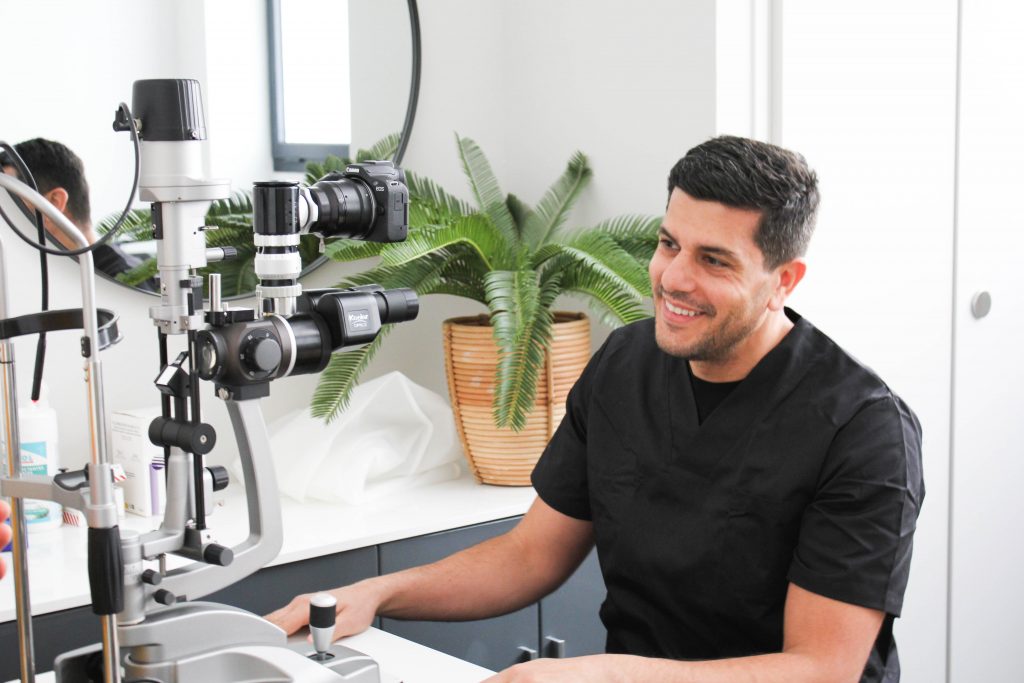
At Phenicia Vision, a leading clinic in Marseille, your comfort is at the heart of our approach. From the moment you arrive, you will be welcomed into a warm and calming environment. A refreshment will be offered to help you relax before the procedure.
Our ophthalmic surgery center is known for its high-quality support and medical specialties. Our medical team, consisting of surgeons, ophthalmologists, orthoptists, and nurses, guides you through every step, from your initial consultation to post-operative follow-up.
Every patient receives personalized care. Whether you have questions, need reassurance, or simply want to be heard, our team is available at all times.
Our other laser correction techniques
Each laser treatment is chosen after a thorough eye examination to ensure a correction perfectly adapted to each eye.
- ➜ Quick and painless surgery.
- ➜ The standard laser correction technique. It uses an excimer and femtosecond laser.
- ➜ Almost immediate recovery.
- ➜ Suitable for thin corneas.
- ➜ Suitable for physically demanding professions (firefighters, military, etc.) or contact sports.
- ➜ Option to perform TRANSPKR (a 100% laser procedure).
- ➜ Can treat presbyopia.
- ➜ Quick and painless surgery.
- ➜ Suitable for people with presbyopia.
- ➜ Almost immediate recovery.
Regain clear vision and a true quality of life
Free yourself from glasses and contact lenses, and fully resume your activities without limitations. Thanks to customized vision correction, you will enjoy stable, comfortable, and lasting vision.
Book an appointment for a personalized consultation at our center in Marseille, and let our doctors guide you through your vision project with care and expertise.
At Phenicia Vision, we place the quality of care, technological innovation, and patient listening at the heart of every operation.

FAQ: SMILE
What is SMILE surgery?
The SMILE (Small Incision Lenticule Extraction) procedure is a minimally invasive refractive surgery designed to correct myopia (nearsightedness) and astigmatism. Through a micro-incision and without creating a corneal flap, it offers quick, pain-free recovery with few eye risks.
Who can benefit from SMILE surgery?
Any adult with stable myopia (nearsightedness) and/or astigmatism. A comprehensive ophthalmological examination is essential to confirm eligibility and compare options such as PKR, LASIK, or PRELEX. For presbyopia (farsightedness due to age) or hyperopia (farsightedness), other techniques may be more suitable depending on your overall eye health.
How is SMILE surgery performed?
Approximately 10 minutes per eye. A femtosecond laser creates a lenticule (a small piece of corneal tissue) inside the cornea, which is then removed through a micro-incision. No corneal flap is created, which reduces the risk of displacement or post-operative complications.
Is the laser safe?
Yes. The excimer laser used is paired with an ultra-precise eye-tracking system. It adjusts the treatment in real-time, even if there's involuntary eye movement. Iris recognition ensures that each eye is treated according to its unique topographical map.
What is the recovery time after SMILE?
Recovery is one of SMILE's key advantages: clear vision within hours, and resumption of activities as early as the next day. There is very little post-operative discomfort, no contact lenses or bandages are needed, and you can quickly return to normal life.
Are there any risks or contraindications for SMILE?
Yes. Certain eye conditions, such as keratoconus, severe dry eyes, or corneal abnormalities, may make SMILE unsuitable. Similarly, a patient who is too young or has an unstable prescription will not be able to undergo the surgery. A complete pre-operative assessment is essential to detect these situations and suggest alternatives, such as PKR or phakic implants.
What are the advantages of SMILE?
SMILE allows for better preservation of corneal nerves
than LASIK, thereby reducing the risk of dry eyes (which is common with LASIK during the first 6 months). The
SMILE also theoretically allows for better preservation of the cornea's mechanical strength, but it does not guarantee
the absence of risk for progressive corneal deformation in cases of latent fragility. PKR is always
preferable if there is any doubt.
Do I need to stop wearing my contact lenses before the surgery?
Yes, it is recommended to stop wearing contact lenses at least one week before both the pre-operative assessment and the procedure, to allow the cornea to return to its natural shape. This ensures accurate eye measurements and a more effective surgical outcome.
Is the surgery covered by Social Security?
No, refractive surgery is considered an elective procedure and is therefore not reimbursed by Social Security. However, some mutual insurance companies or supplementary health plans may offer benefits, including partial coverage of the cost of the procedure in the form of a package or annual reimbursement. It is therefore advisable to check the terms of your contract before the procedure.
What are the possible risks or side effects?
After the procedure, some temporary side effects may occur:
- Mild dry eyes: a feeling of discomfort or stinging, especially during the first few days.
- Light sensitivity: your eyes may be more sensitive to natural or artificial light.
- Halos: seeing blurry circles around light sources, especially at night.
These effects are usually harmless and gradually disappear within a few weeks as your eyes heal. Moisturizing treatment may be prescribed to relieve dry eyes, and the risks remain very low.
How to book an appointment?
Simply book an ophthalmological assessment via Doctolib or by directly contacting a center specializing in refractive surgery. This appointment, conducted with an optometrist or an ophthalmic surgeon, allows us to precisely measure your correction, evaluate the overall health of your eyes, and determine if your myopia has been stable for at least one year.
If no contraindications are detected (such as a cornea that is too thin, keratoconus, or early-stage cataracts) and you meet the eligibility criteria, the ophthalmologist can then suggest an appropriate surgical technique (LASIK, PKR, or SMILE) and schedule the procedure. This initial consultation is essential to ensure personalized care that is safe and tailored to your visual needs and lifestyle. During this assessment, a detailed quote will be provided, including the price of the operation based on the chosen technique.
What are the contraindications for refractive surgery?
Refractive surgery is not recommended in certain cases, particularly if you have a cornea that is too thin, keratoconus, an opaque lens, or cataracts. These conditions can affect the safety of the procedure and reduce its effectiveness. If these factors are identified during the pre-operative assessment, an appropriate alternative, such as lens surgery, may be suggested to restore vision quality in a lasting way.
Is it possible to have surgery if I've already had cataract surgery or have implants?
Yes, surgery is sometimes possible even after cataract surgery or with intraocular implants, but this depends on the type of implant, the cornea's quality, and any remaining vision correction. In some cases, supplementary refractive surgery (such as LASIK or PKR) may be offered to further improve visual precision after implant placement.
A thorough ophthalmological assessment, performed by our ophthalmic surgeon, is essential to evaluate the feasibility and safety of this secondary correction, taking into account visual stability, the condition of the tear film, and corneal topography.
Can presbyopia and myopia be corrected at the same time?
Yes, in some cases, it is possible to correct both myopia and presbyopia during the same procedure, using specific techniques like presbyLASIK or implant placement. The goal is to achieve clear vision for both near and far, considering age-related visual needs. However, the feasibility of this double correction depends on several factors: the patient's age, the stability of myopia, the quality of the cornea, and visual expectations.