Nearsightedness affects a growing number of people worldwide. According to the WHO, nearly 50% of the global population could be nearsighted by 2050. In France, more and more children and adults are seeking solutions to avoid wearing glasses or daytime contact lenses. While laser refractive surgery (LASIK, PKR, SMILE) is an effective and permanent solution, it is not suitable for everyone. For those who cannot or prefer not to have surgery, an alternative is available: night lenses, also known as orthokeratology lenses or Ortho-K. These lenses allow you to enjoy clear vision without glasses or contact lenses throughout the day.
What are night lenses and how do they work?
Definition and Principle of Orthokeratology
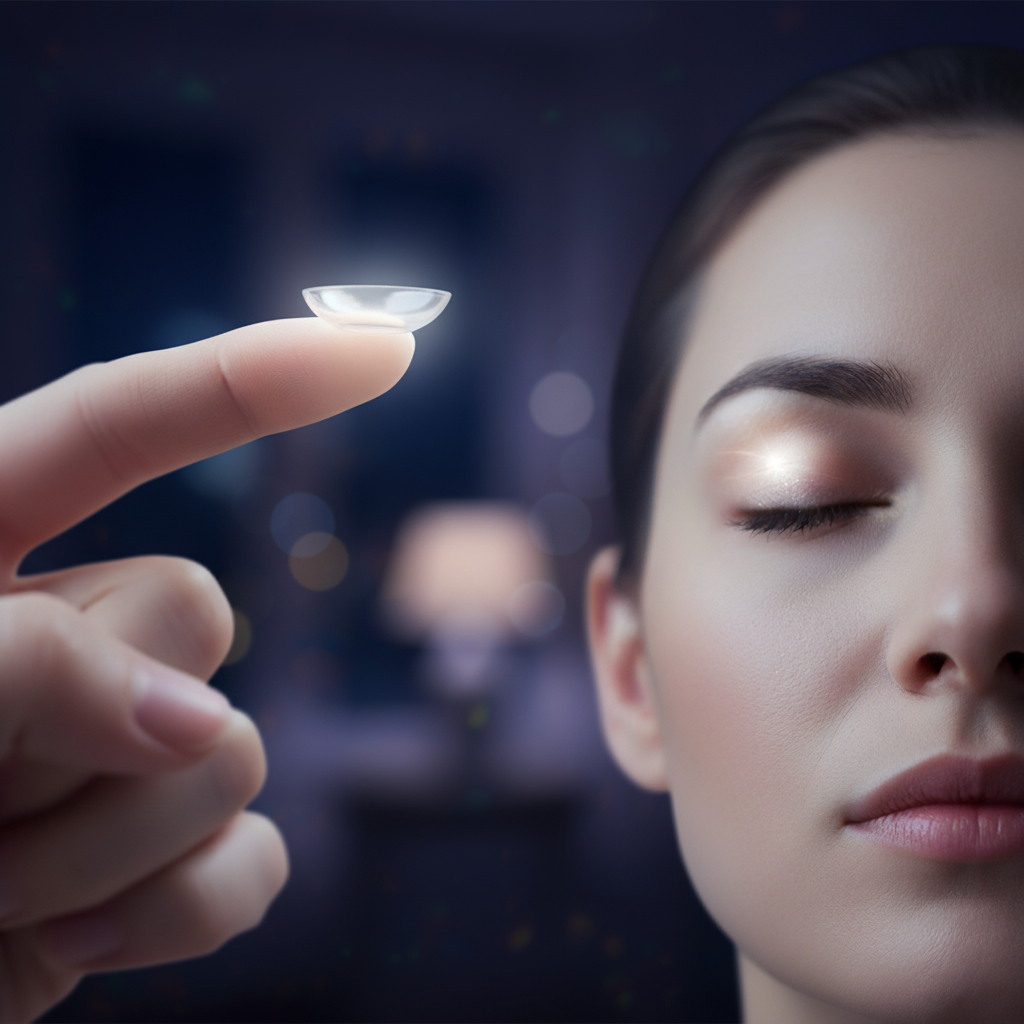
Night lenses are a specific type of rigid, gas-permeable lens, designed to be worn only while you sleep. Their purpose is to temporarily reshape the cornea to correct your vision. During the night, the lens applies gentle, controlled pressure to the surface of your eye, subtly and reversibly changing its curvature.
The result is that upon waking, after removing the lenses, your cornea maintains the new shape from overnight wear. This means you'll have clear distance vision without needing glasses or daytime contact lenses. This effect typically lasts around 24 hours, so you'll need to wear the lenses regularly each night to maintain these results.
Tip: To better understand
Night lenses act like a small 'mold' for your eyes. When you sleep with them, they gently flatten and reshape the surface of your eye (similar to how your face might have a mark after sleeping on a pillow). Thanks to this new shape, light entering your eye focuses better, giving you clear vision throughout the day without glasses or contact lenses. The effect is temporary, lasting about one day. To maintain clear vision, you need to wear the lenses every night.
What Vision Problems Can They Correct?
Ortho-K lenses primarily correct:
– Mild to moderate nearsightedness, typically up to -4 diopters (and sometimes up to -6, depending on the cornea's shape).
– Mild astigmatism, in certain cases.
– Less commonly, mild farsightedness or early presbyopia (age-related farsightedness).
They are most frequently recommended for children and teenagers whose nearsightedness is getting worse, as refractive surgery is not advised until their vision has stabilized.
Differences from Soft Lenses and Surgery
Unlike soft or rigid lenses worn during the day:
– Ortho-K lenses are worn only at night, which helps avoid dry eye issues often linked to daytime contact lens wear.
– They offer complete freedom during sports, water activities, and professional tasks.
– They involve no surgery: your cornea will return to its original shape if you stop wearing the lenses at night.
Compared to surgical procedures like LASIK, PKR, and SMILE, orthokeratology is 100% reversible. This makes it an excellent option for patients who are still unsure about surgery or are not eligible for it.
What are the benefits of night lenses?
Clear vision without glasses or contact lenses during the day.
After wearing your lenses all night, your vision will be clear from morning until evening. You can drive, read a whiteboard in class, work on a screen, or play sports without discomfort or relying on glasses. Professions that require optimal vision without restrictions (such as firefighters, military personnel, pilots, athletes, and divers) find this particularly beneficial.
A non-invasive and reversible alternative.
Certaines personnes ne peuvent pas bénéficier d’une chirurgie réfractive (cornée trop fine, myopie non stabilisée, âge < 18 ans) ou appréhendent l’opération. Les lentilles Ortho-K représentent une option sécuritaire et temporaire, qui permet d’attendre la stabilisation de la vue ou de différer une chirurgie définitive.
Slowing down the progression of myopia in children.
Many studies show that orthokeratology slows down the progression of myopia in children and teenagers. By gently reshaping the cornea, these lenses influence the eye's axial growth, which helps limit the worsening of myopia. This preventive effect is a significant benefit for parents.
Greater comfort and visual safety.
Wearing contact lenses during the day can lead to dry eyes, especially in air-conditioned environments or when using screens. Ortho-K avoids this issue. Furthermore, not having anything in your eyes during the day reduces the risk of losing or dislodging lenses during intense physical activities.
What are the limitations and contraindications?
Eligibility criteria.
L’orthokératologie n’est pas adaptée à tous. Pour en bénéficier : myopie légère à modérée (< –4D), cornée saine sans pathologie, bonne hygiène et suivi strict. Un bilan complet est indispensable (topographie, mesures précises, film lacrymal).
Strict maintenance and hygiene.
Night lenses require daily discipline, including cleaning, disinfection, and regular replacement. Failing to follow these steps increases the risk of infectious keratitis.
Temporary results and dependence.
The corrective effect is reversible. If you stop wearing the lenses, your myopia will return within a few days. Therefore, consistent use is necessary.
Cost and reimbursement.
Ortho-K lenses are more expensive than traditional soft contact lenses (ranging from €400 to €800 per pair). Social Security does not cover this treatment, but some private health insurance plans may offer partial reimbursement.

Practical advice for effective and safe treatment.
To maximize benefits and minimize risks: consult a specialist, adhere to hygiene and maintenance guidelines, attend follow-up appointments (24 hours, 1 week, 1 month, then every 6 to 12 months), and report any unusual symptoms.
Conclusion: an innovative and safe solution.
Orthokeratology lenses offer a modern and non-invasive alternative, suitable for adults who are not candidates for surgery and for children whose myopia is progressing rapidly. They provide clear vision without glasses or daytime contact lenses, while being reversible and safe with proper follow-up. However, they require strict adherence to hygiene and professional guidance.
To find out if you are eligible, consult a specialized ophthalmologist. They will assess your situation and recommend a personalized treatment plan.
FAQ – Frequently Asked Questions about Night Lenses.
Can Ortho-K lenses be used from a young age?
Yes, from 6-7 years old, with parental supervision and strict follow-up. They are particularly recommended for slowing down the progression of myopia.
What happens if I forget to wear them one night?
Your vision will remain clear for one day, but may start to decline afterward. Regular wear is necessary to maintain the effects.
Is it painful?
No, the lenses do not cause pain. You might feel a slight discomfort during the first few nights as your eyes adjust.
Can Ortho-K be combined with glasses?
Yes, a low-power pair of glasses can be used at the end of the day if the effect of the lenses starts to wear off.
Do Ortho-K lenses carry a risk of infection?
The risk of infectious keratitis is low if hygiene and care instructions are followed and if regular medical check-ups are performed.
How long does it take for the correction to be effective?
Most patients notice an improvement after the first night, with stable vision achieved within 1 to 2 weeks.
How long do night lenses last?
On average, a pair lasts 12 to 18 months, provided that care instructions are followed.
What precautions should I take to maintain my eye health?
Use appropriate cleaning products, never rinse lenses with tap water, and consult your specialist regularly.